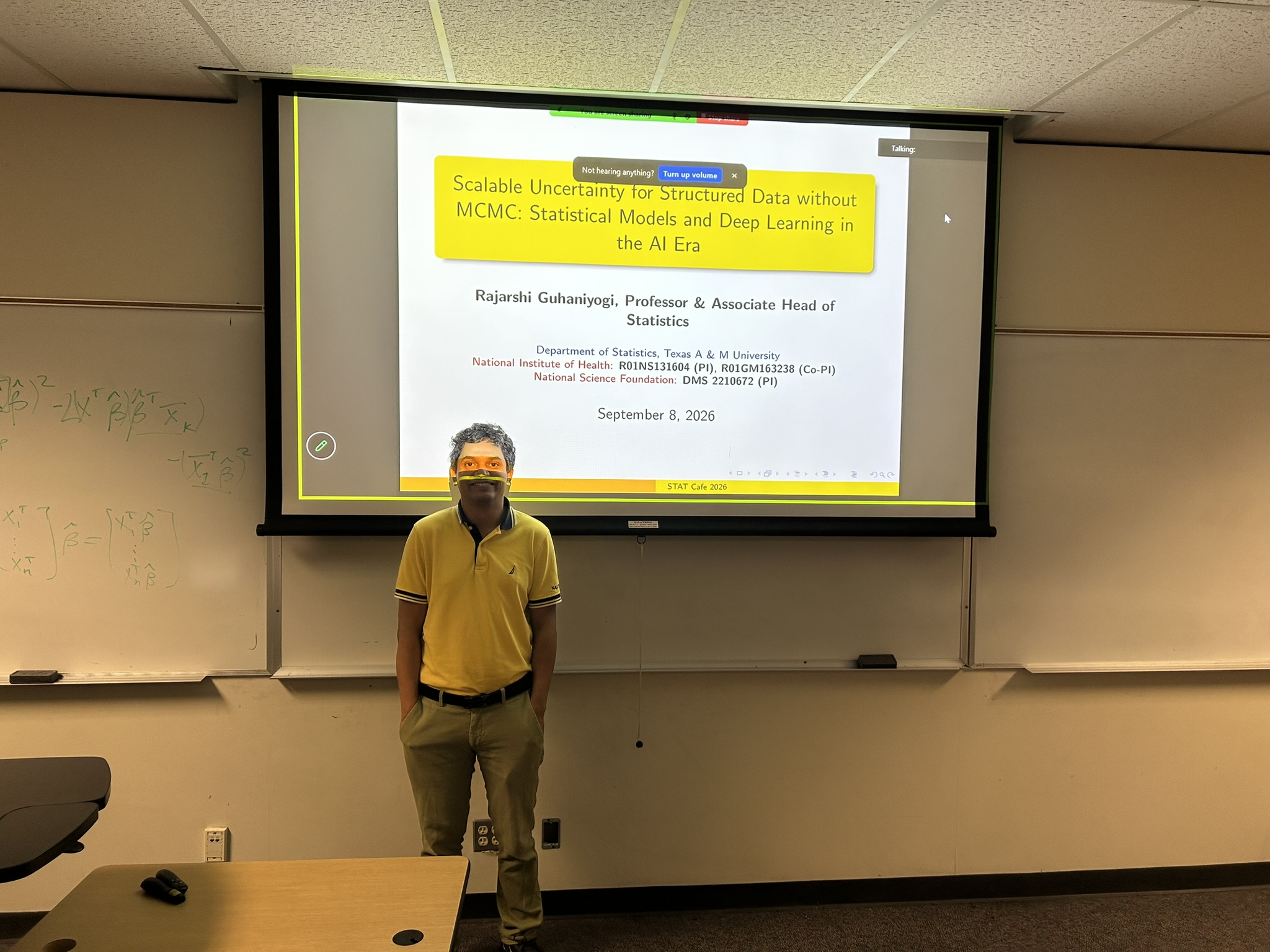
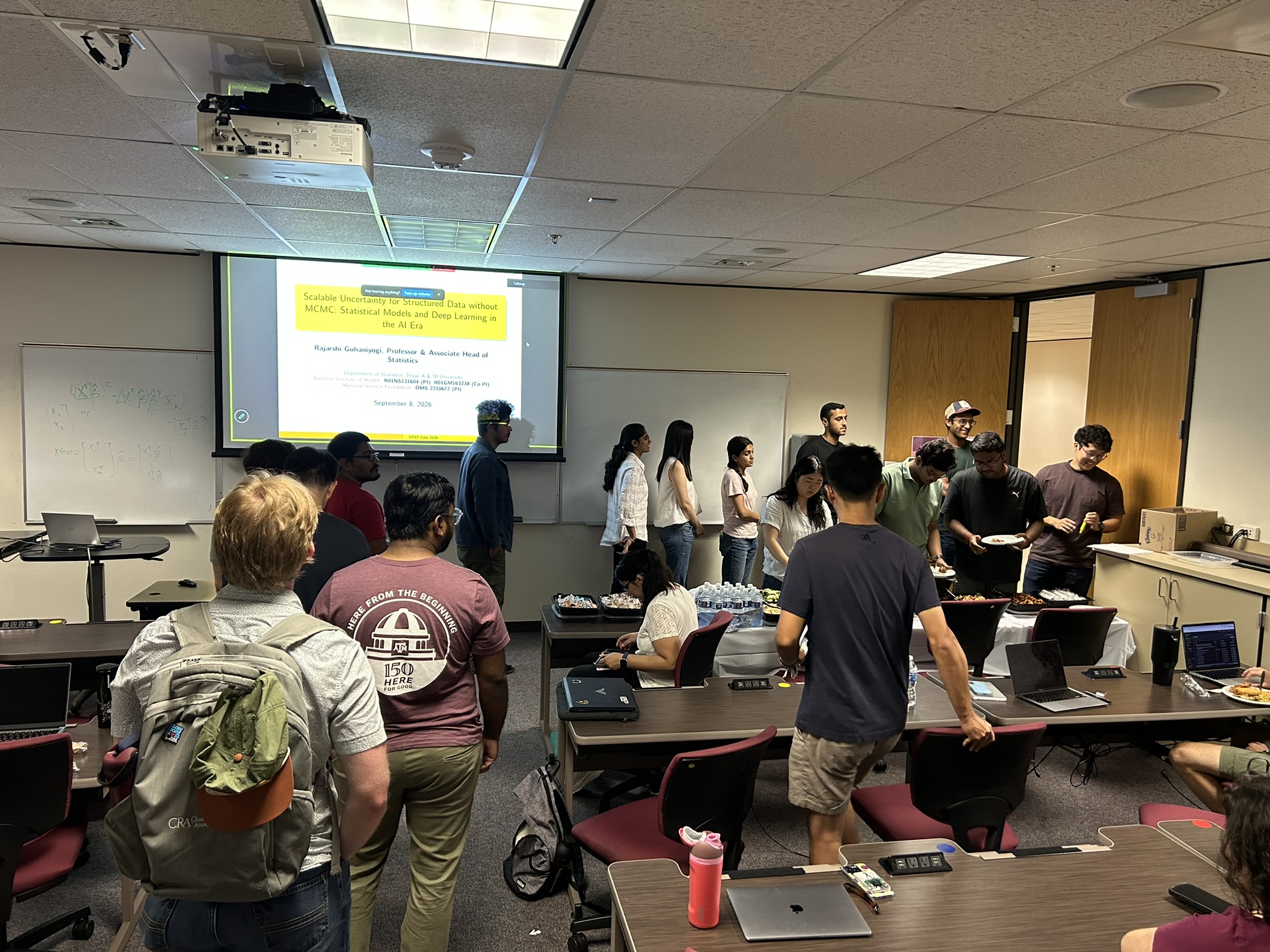
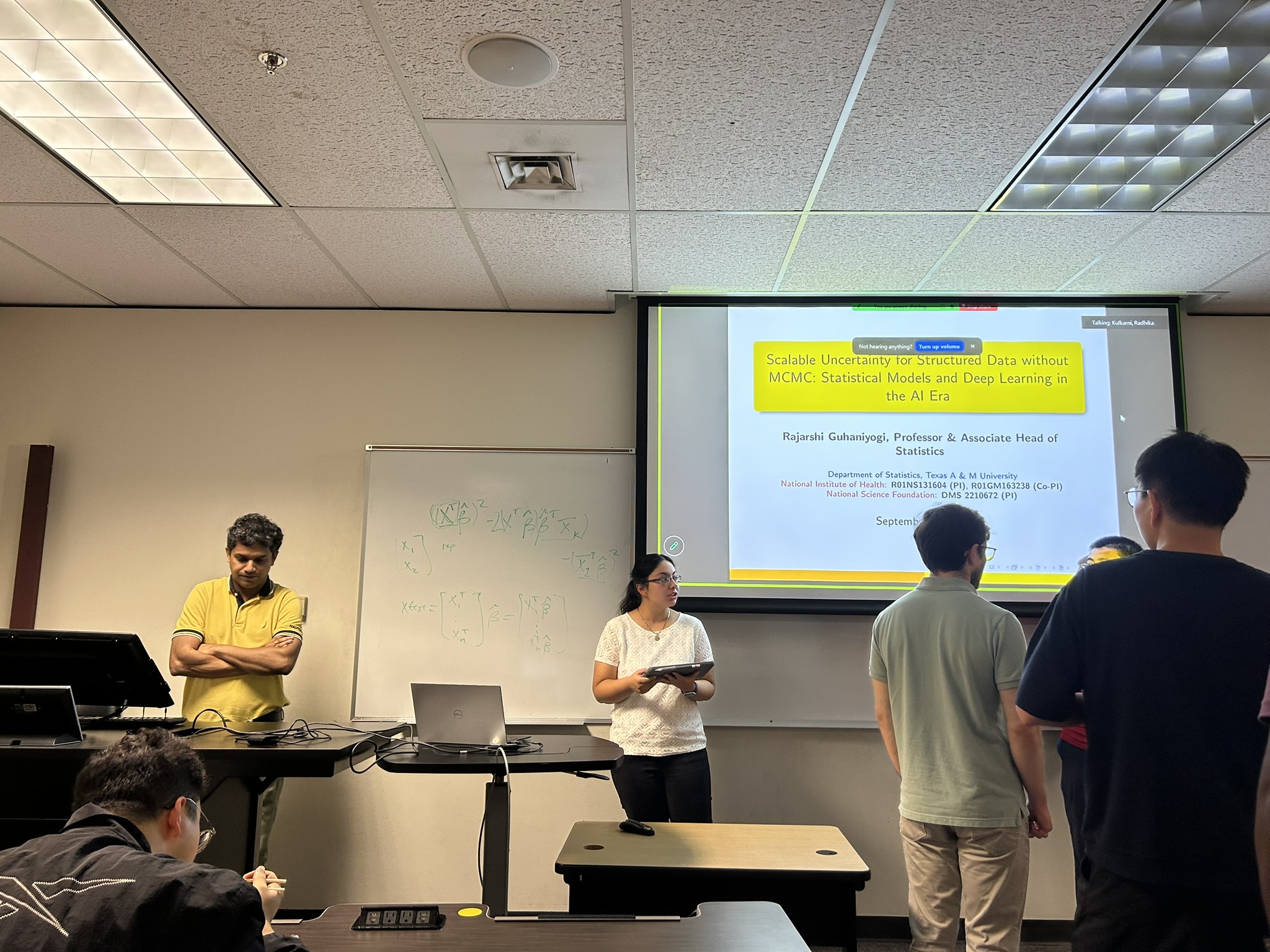
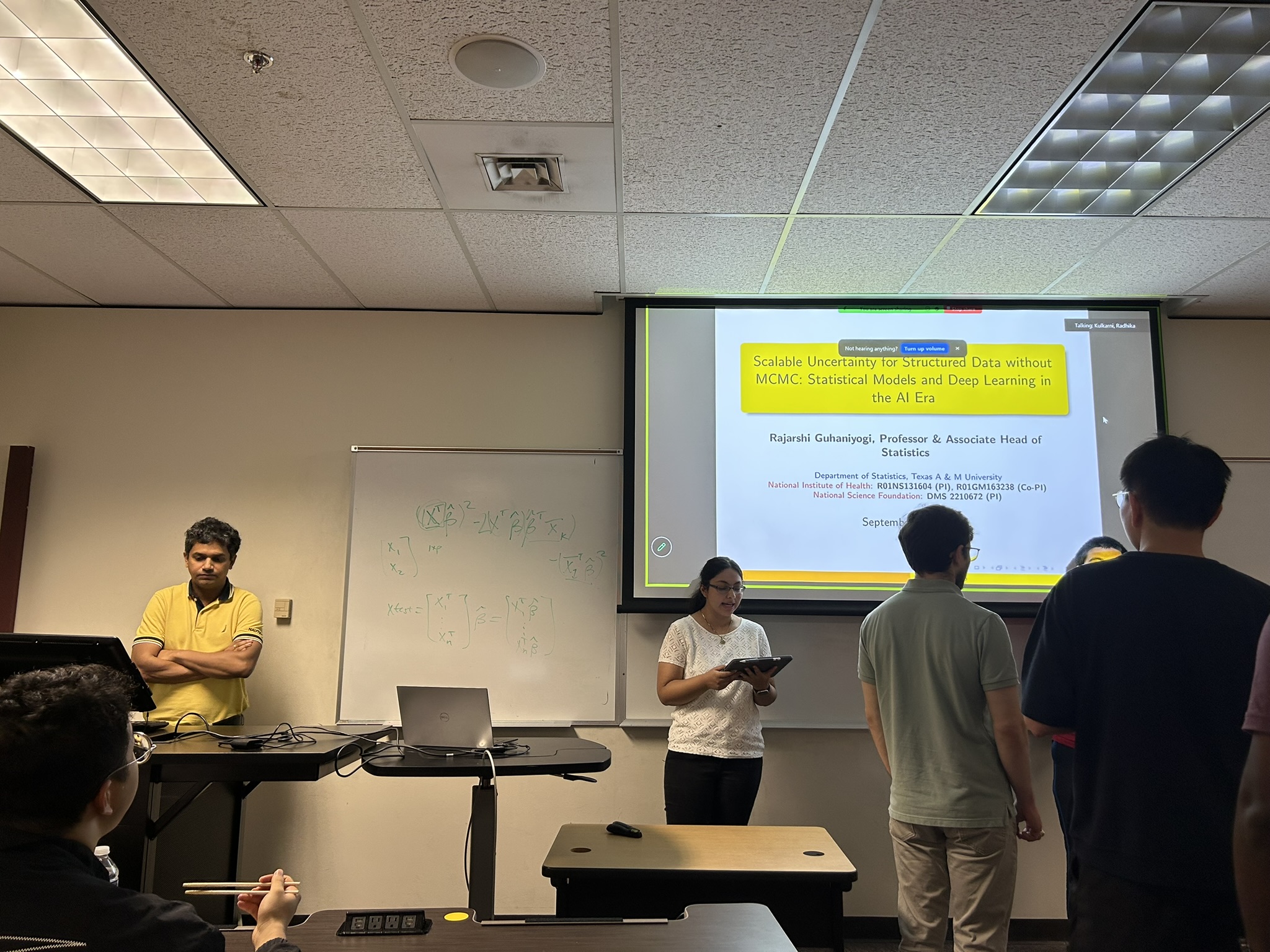
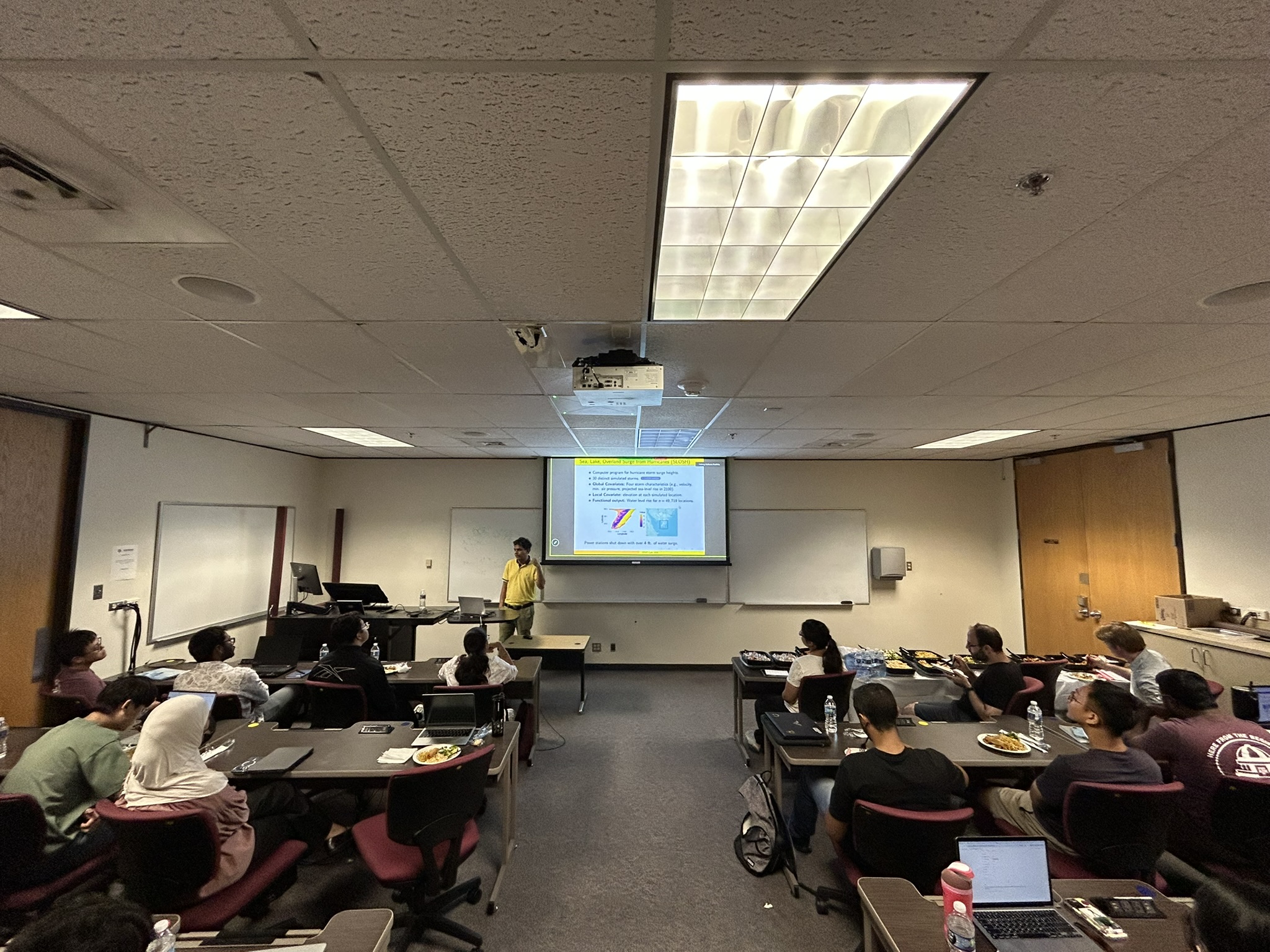
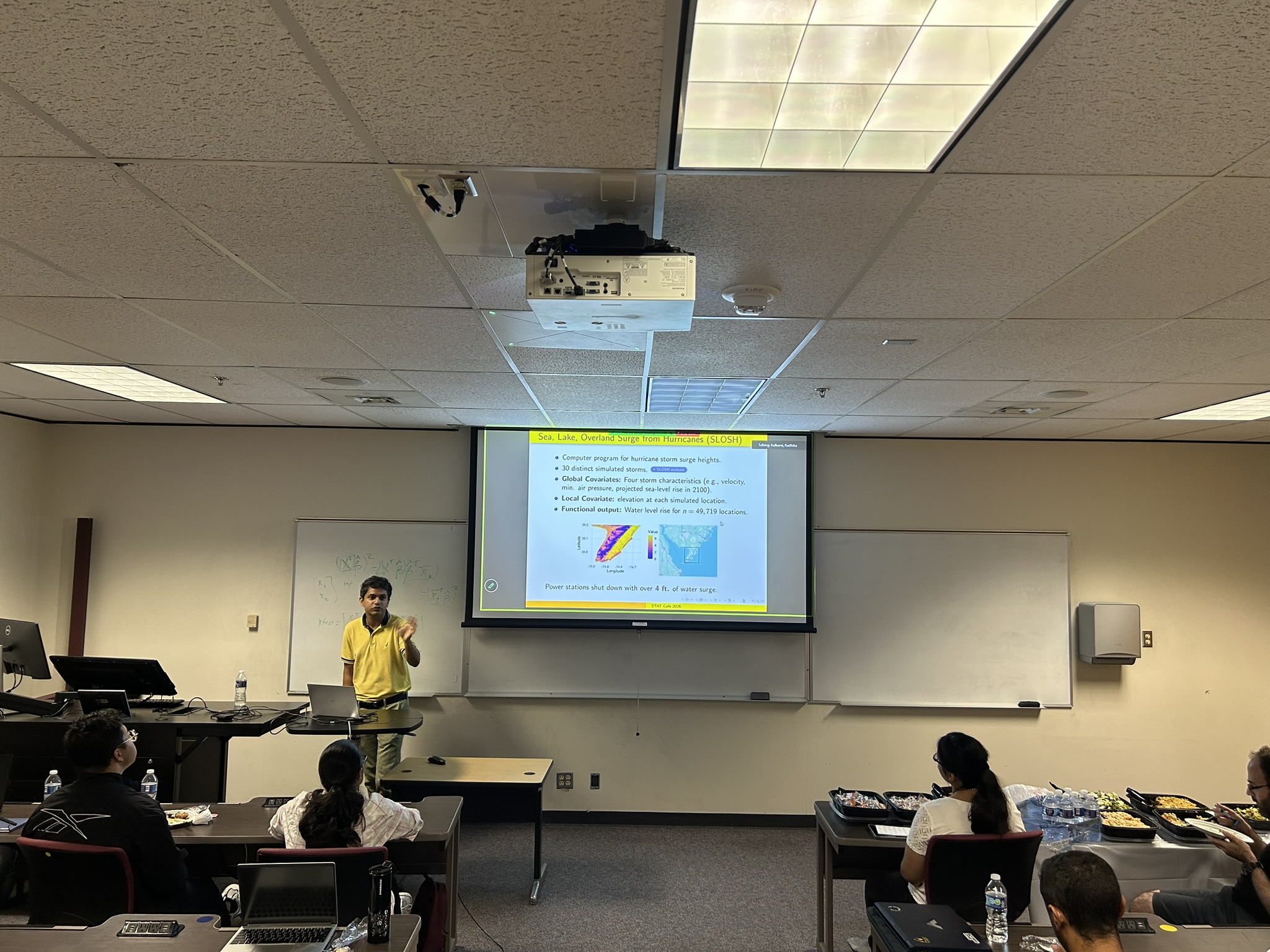
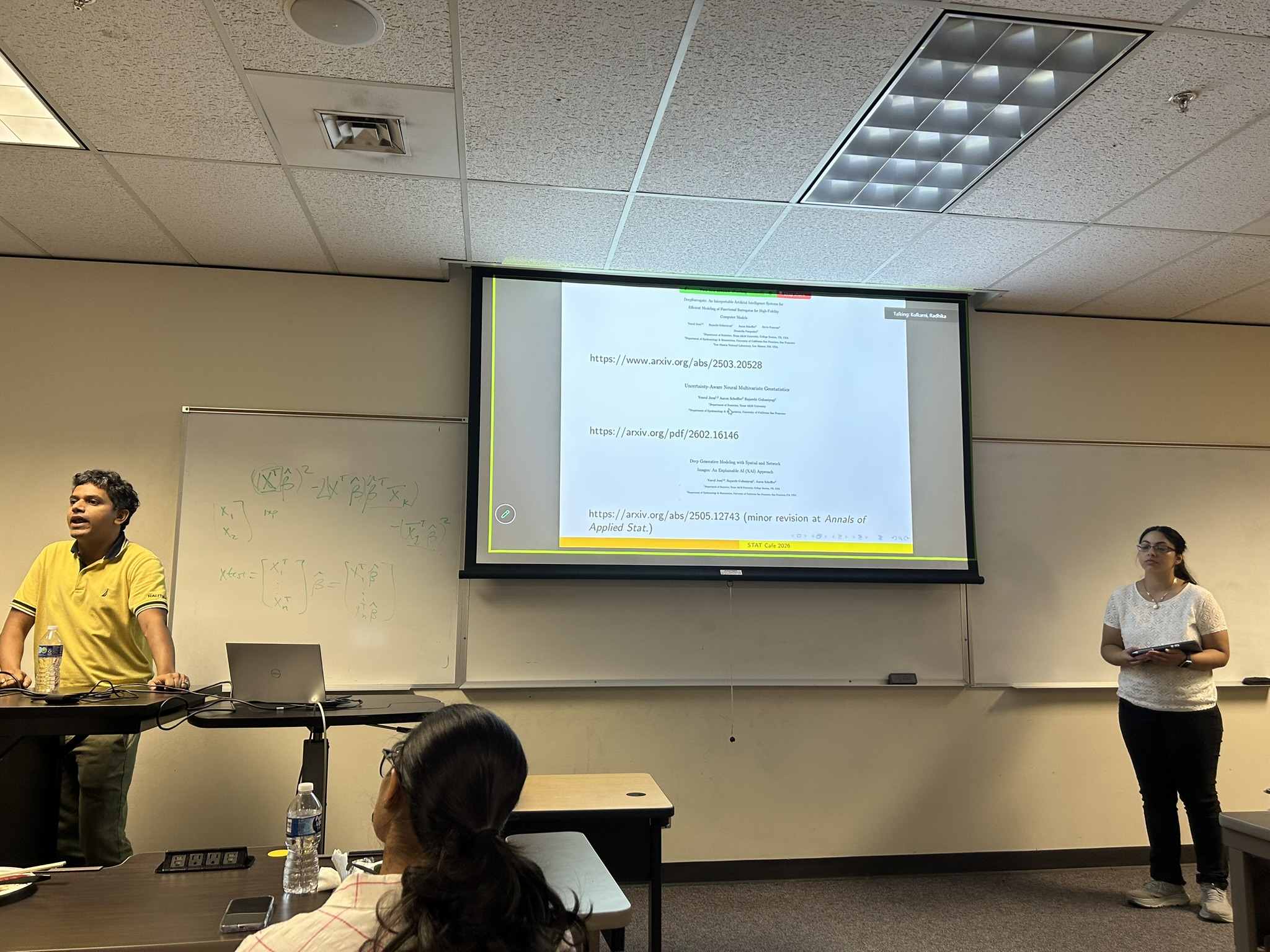
Stat Cafe - Dr. Rajarshi Guhaniyogi

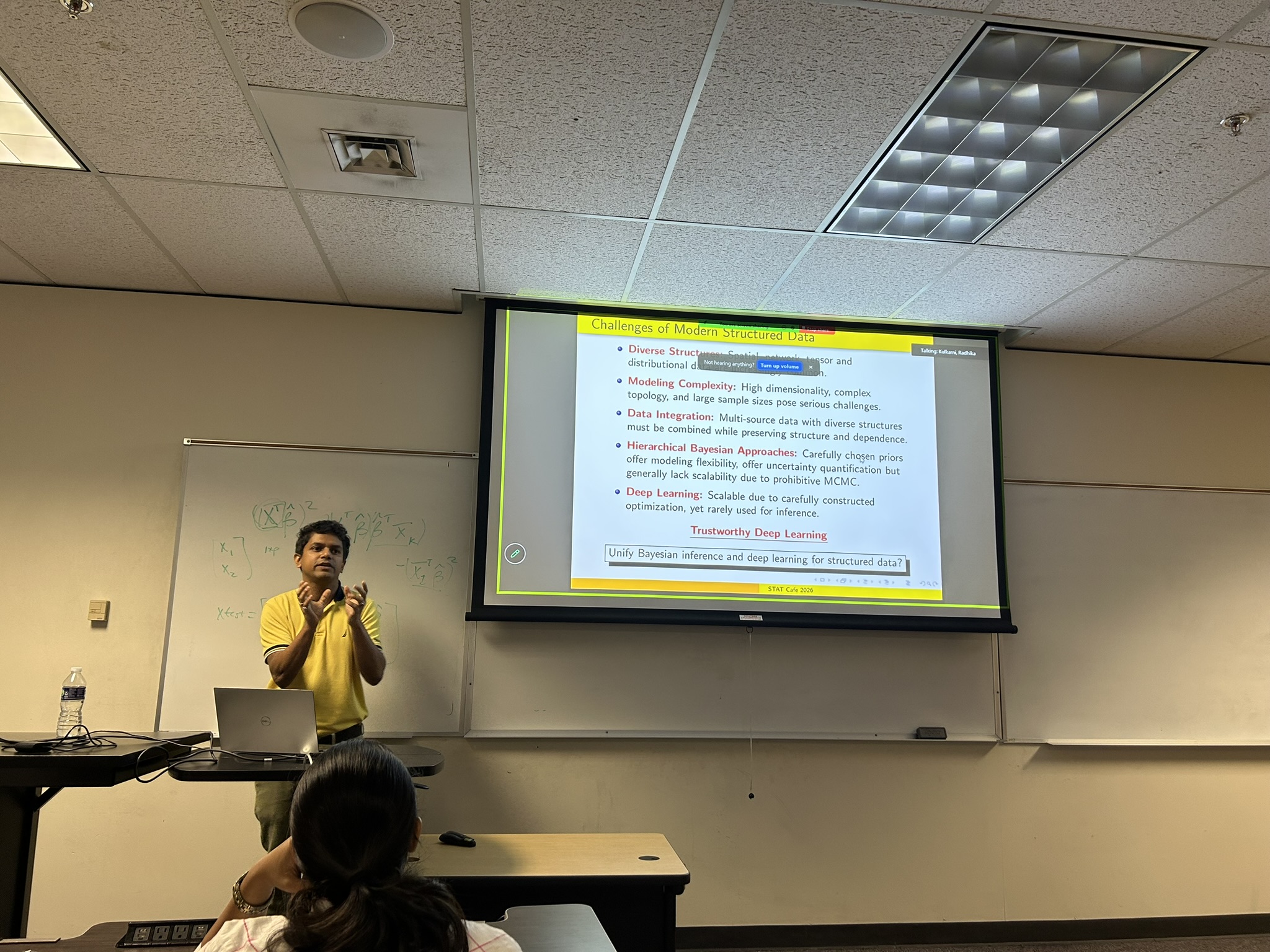
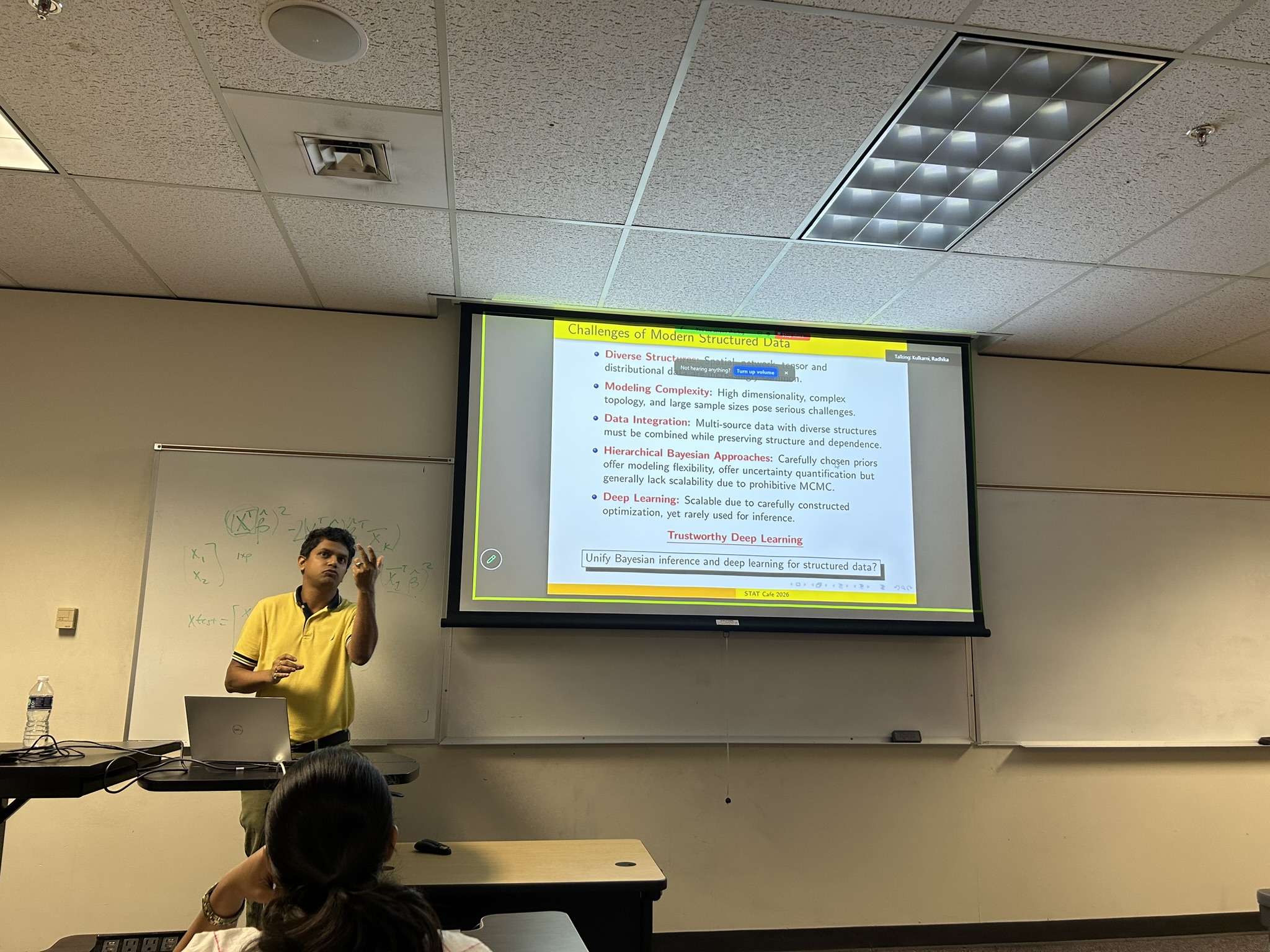
Scalable Uncertainty for Structured Data without MCMC: Statistical Models and Deep Learning in the AI Era
- Time: Tuesday, 9/8/2026 from 11:10AM to 12:25PM
- Location: BLOC 448
Description
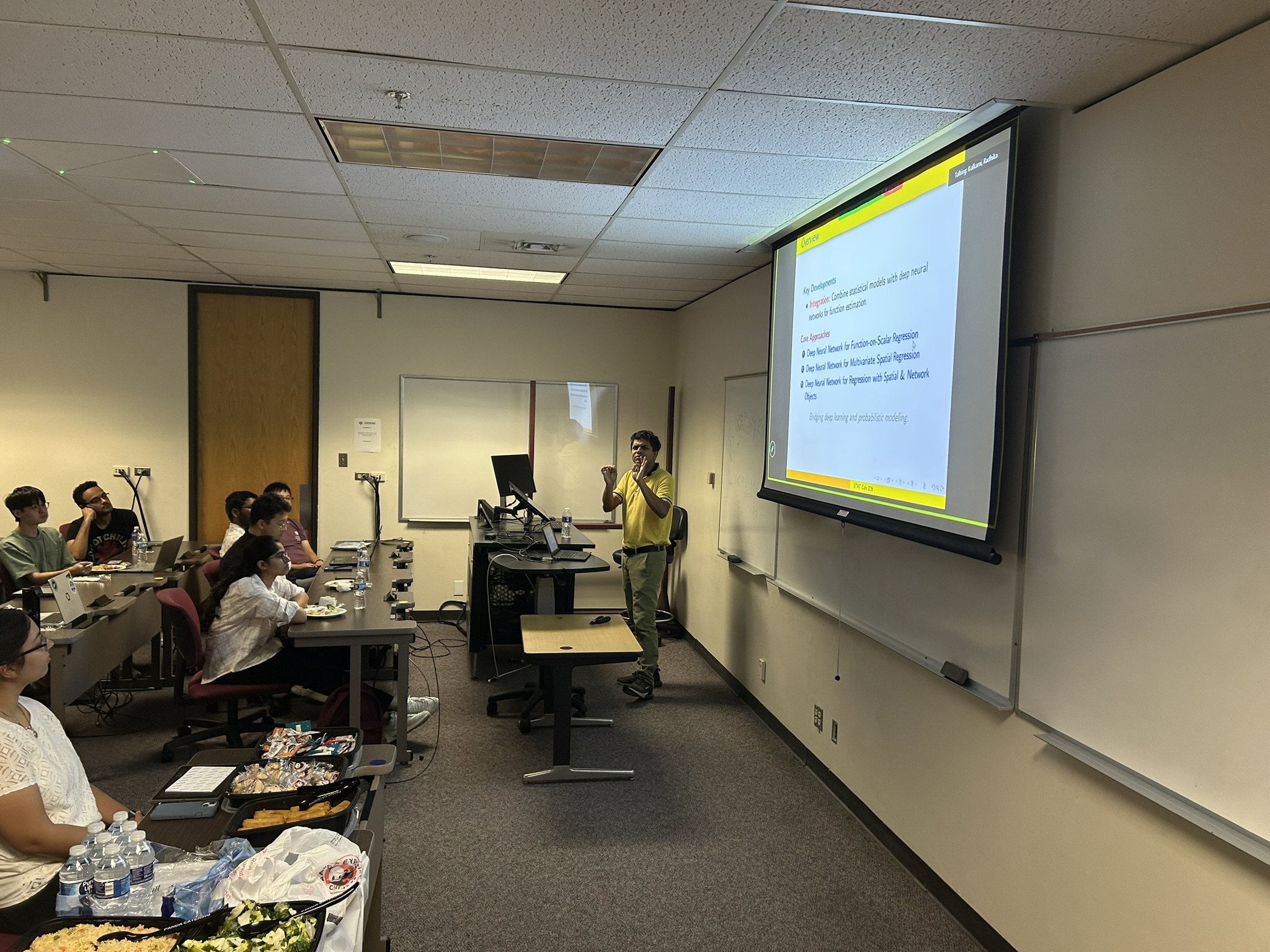
Modern statistical modeling aims to quantify uncertainty for massive structured data models, but traditional Bayesian methods relying on Markov Chain Monte Carlo (MCMC) are impractical for these scales and complexities. While deep neural networks enable scalable computation, they often fail to provide statistically principled uncertainty. This talk will highlight approaches that specifically avoid MCMC, focusing instead on scalable inference strategies where deep neural networks are embedded within interpretable statistical models. These new methods deliver rapid uncertainty quantification for large structured datasets, grounded in principled calibration, and are demonstrated through projects in environmental science, neuroscience, and national laboratory simulations.
Our Speaker
Dr. Rajarshi Guhaniyogi joined Texas A&M in 2021, following his tenure as an assistant and associate professor at UC Santa Cruz from 2014 to 2021. His research expertise spans spatial statistics, tensor-based modeling, multi-object data integration, Gaussian processes, and uncertainty-aware deep neural networks, and he is engaged in active collaborations with neuroscientists, environmental scientists, and scientists from national laboratories. Dr. Guhaniyogi has been recognized with several international awards, including the Early Career Award in Statistics and Data Science from the International Indian Statistical Association and the Early Investigator Award from the ASA Section on Statistics and Environment. He currently serves as Associate Editor for leading journals such as the Journal of Machine Learning Research, the Journal of Computational and Graphical Statistics, and Computational Statistics and Data Analysis. His research program is supported by federal grants from the National Institutes of Health, National Science Foundation, and Department of Energy.
Gallery